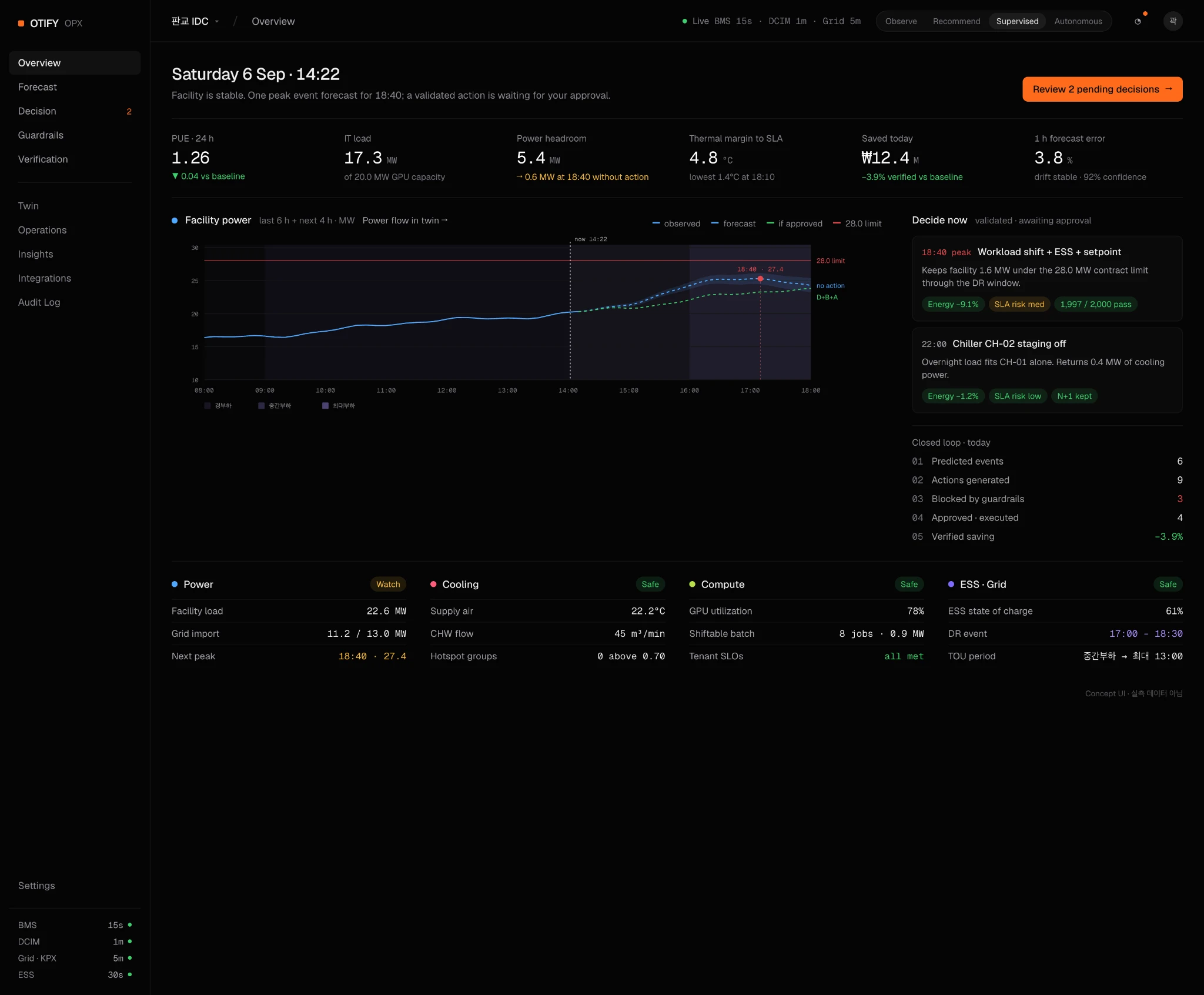
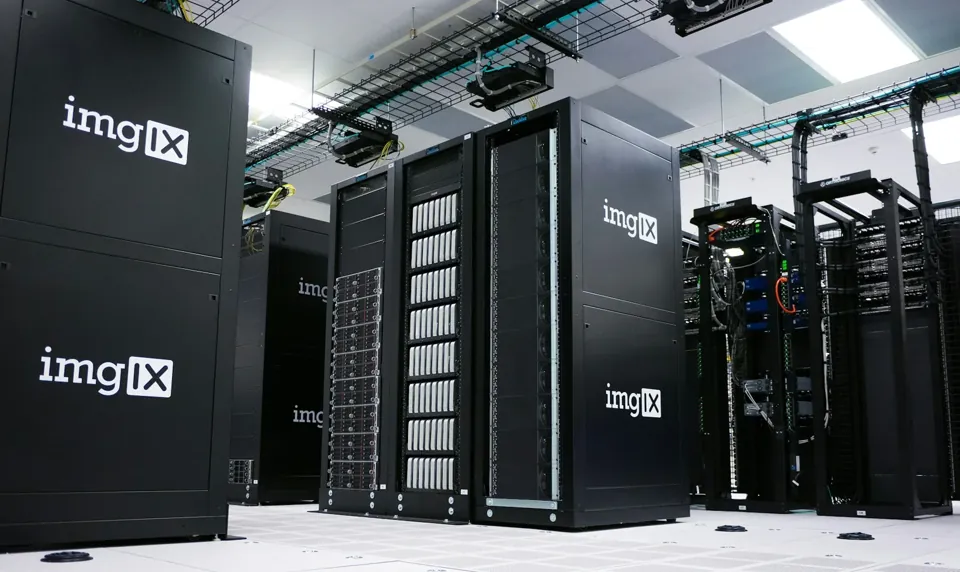
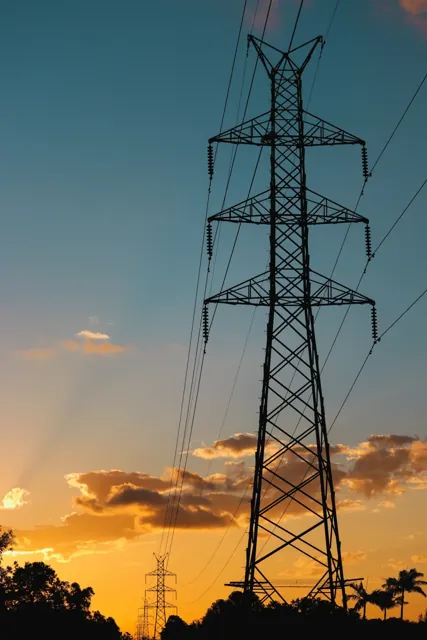
Shared scenarioMore batch jobs are driving up electricity demand. Storage is available, but a reserve must be maintained and jobs must finish on time.
Example: current-state operations
Check the readings.
Gather the context separately.
- What is available
- Current power demand, temperature, storage charge and active alarms
- What still needs checking
- How long load will rise, which jobs can move and whether enough charge will remain after discharge
- Evaluating a response
- The operator gathers system data and job schedules to compare options
- After the action
- Collect operating logs and measurements to assess the result
“We know the current state. We still need the evidence for the next decision.”
The workflow QUNIA aims to connect
Assess future risk and response constraints
in the same context.
- What the design aims to show
- The timing and range of the predicted peak, contributing variables and data freshness
- What to check together
- Projected load, remaining storage charge, job deadlines and headroom for each response
- Evaluating a response
- Review response options and constraint evidence side by side, then select and approve
- After the action
- Compare the forecast captured at approval with actual observations
“Understand why a response may be feasible—and what needs checking first.”
This example illustrates workflow differences. Forecasting and optimization capabilities vary by existing system configuration. QUNIA's deployment scope is defined through site integration and validation.