MDMS Input
Inputs retain their distinct time, variable, domain and data-type dimensions, preserving the space each signal belongs to.
POWERTHERMALCOMPUTE
OTIFY models the relationships between industrial signals,
turning forecasts into the basis for operational decisions.
LPM · Large Predictive Model
LPM is OTIFY’s proprietary predictive algorithm. It treats time, variables, domains and data types as distinct spaces, then models their relationships to predict the next state.
Our design aims to preserve the source structure and relationships that matter for prediction, minimizing the loss of information needed for decisions.
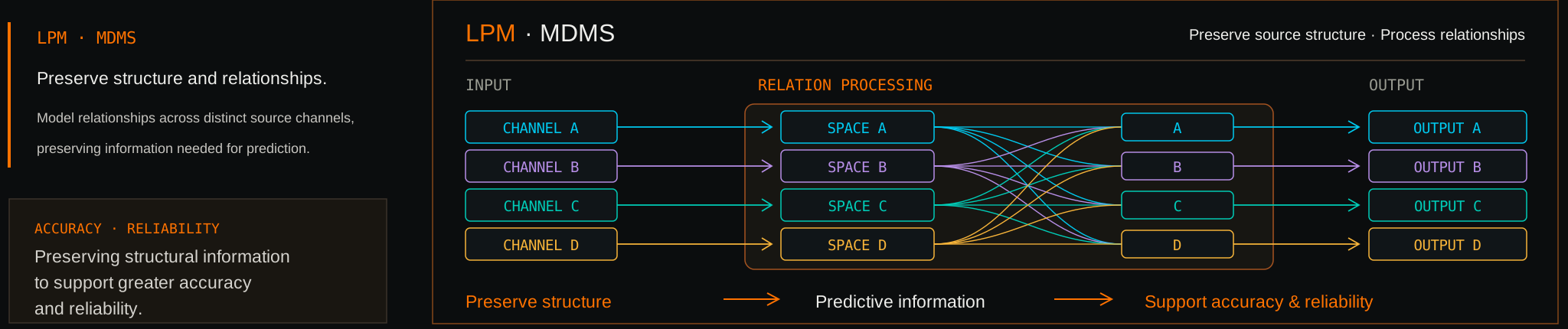
Inputs retain their distinct time, variable, domain and data-type dimensions, preserving the space each signal belongs to.
The model processes relationships across dimensions and spaces, changes in state, the propagation of effects and uncertainty.
Outputs distinguish forecasts, prediction intervals, risk levels, influential variables and scenario-specific results.
MDMS is OTIFY's term for this architecture. Structural preservation and predictive performance must be validated for each dataset and operating context.
Handle data with different sampling rates and units while retaining its original context.
Connect changes in one domain to their potential effects on another.
Go beyond a single number with intervals, risk indicators and information for evaluating response scenarios.
The platform for managing the workflow from forecasts to verified outcomes.
The engine that connects response evaluation, constraint checks, approvals and execution.
The core technology that models industrial signals to forecast future operating conditions.
Questions and insights from research, business strategy and product development.
Read the OTIFY blog ↗